
Best Touchless Faucets with Advanced Sensors: Infrared vs. Adaptive & Self-Calibrating Technology
Not all “sensor faucets” sense the same way. Basic infrared detection can work extremely well, but modern commercial faucets increasingly add dual sensors, automatic detection-zone setup, concealed sensing, microprocessor adaptation and diagnostic controls. This review examines five different approaches to reliable hands-free activation.
Infrared Is the Starting Point—not the Whole Story
An emitter and receiver detect reflected infrared energy when hands enter the sensing field.
Electronics adjust the effective detection zone for surrounding sink conditions.
Multiple sensing channels can improve detection stability and hand recognition.
The sensing architecture is integrated into the spout for cleaner aesthetics.
Commissioning allows detection distance to be tuned to the actual basin.
Commercial systems may report battery, power or solenoid operating conditions.
Five Advanced Commercial Sensor Approaches
| Product | Sensor Strategy | Best Application |
|---|---|---|
| Fontana Solo Matte Black | Microcomputer self-adjusting infrared | Adaptive commercial installations |
| BathSelect Commercial Infrared | Self-adjusting + anti-false triggering | High-traffic restrooms |
| Sloan BASYS EFX-200 | Double infrared + automatic setting | Institutional facilities |
| KOHLER Kumin Kinesis | Concealed precision sensor | Design-led commercial interiors |
| American Standard NextGen Selectronic | Integrated commercial sensing | Easy-service public restrooms |
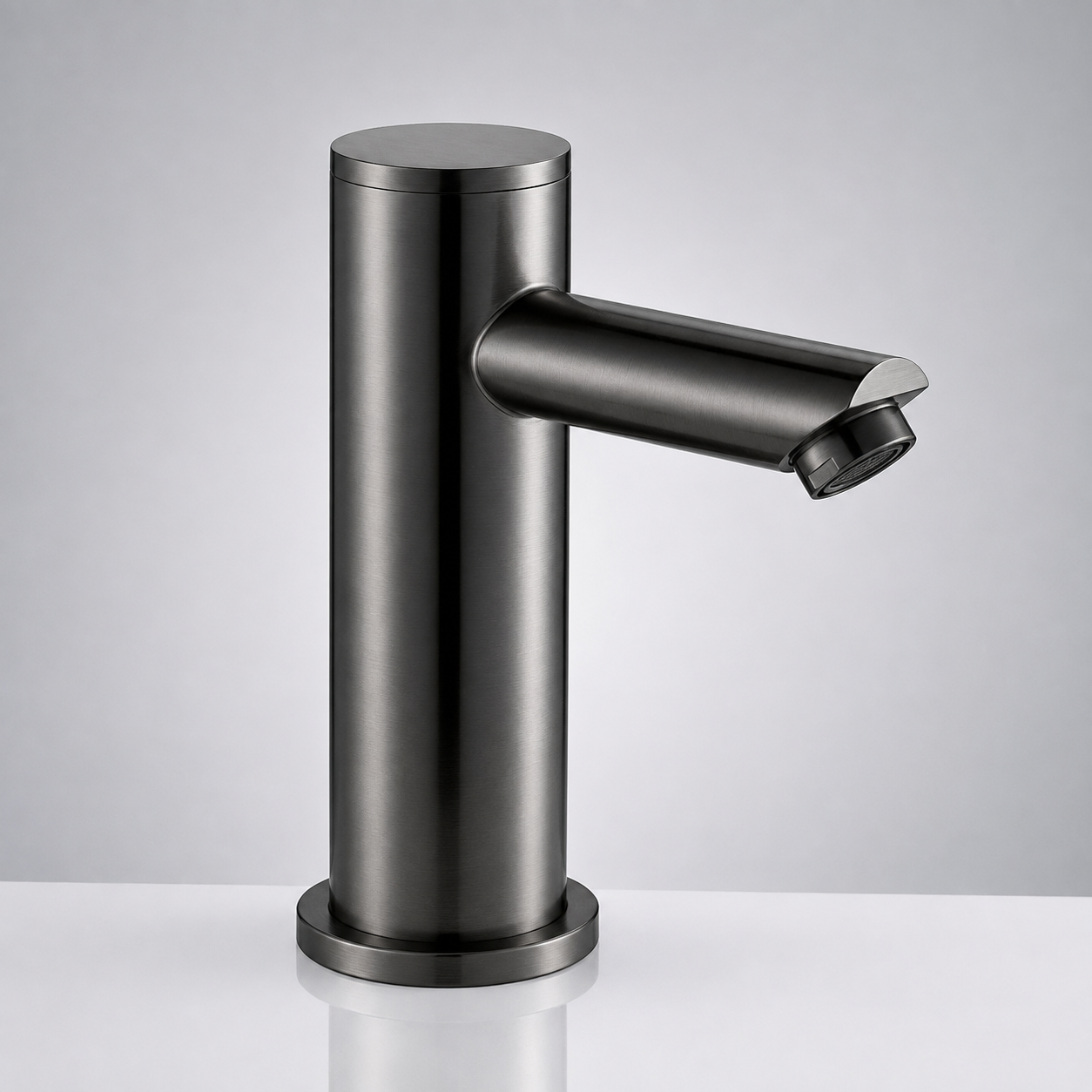
Fontana Solo Matte Black Commercial Automatic Touchless Sensor Faucet
The Fontana Solo Matte Black Commercial Automatic Touchless Sensor Faucet uses microcomputer-controlled sensing that automatically adjusts its detection zone according to the color and geometry of the lavatory environment.
That is useful in commercial specification because polished stone, white vitreous china, dark basins and different sink geometries can present very different sensing conditions.
Adaptive detection reduces dependence on one fixed factory sensing condition.
Test hand entry from multiple angles after the final basin and countertop are installed.
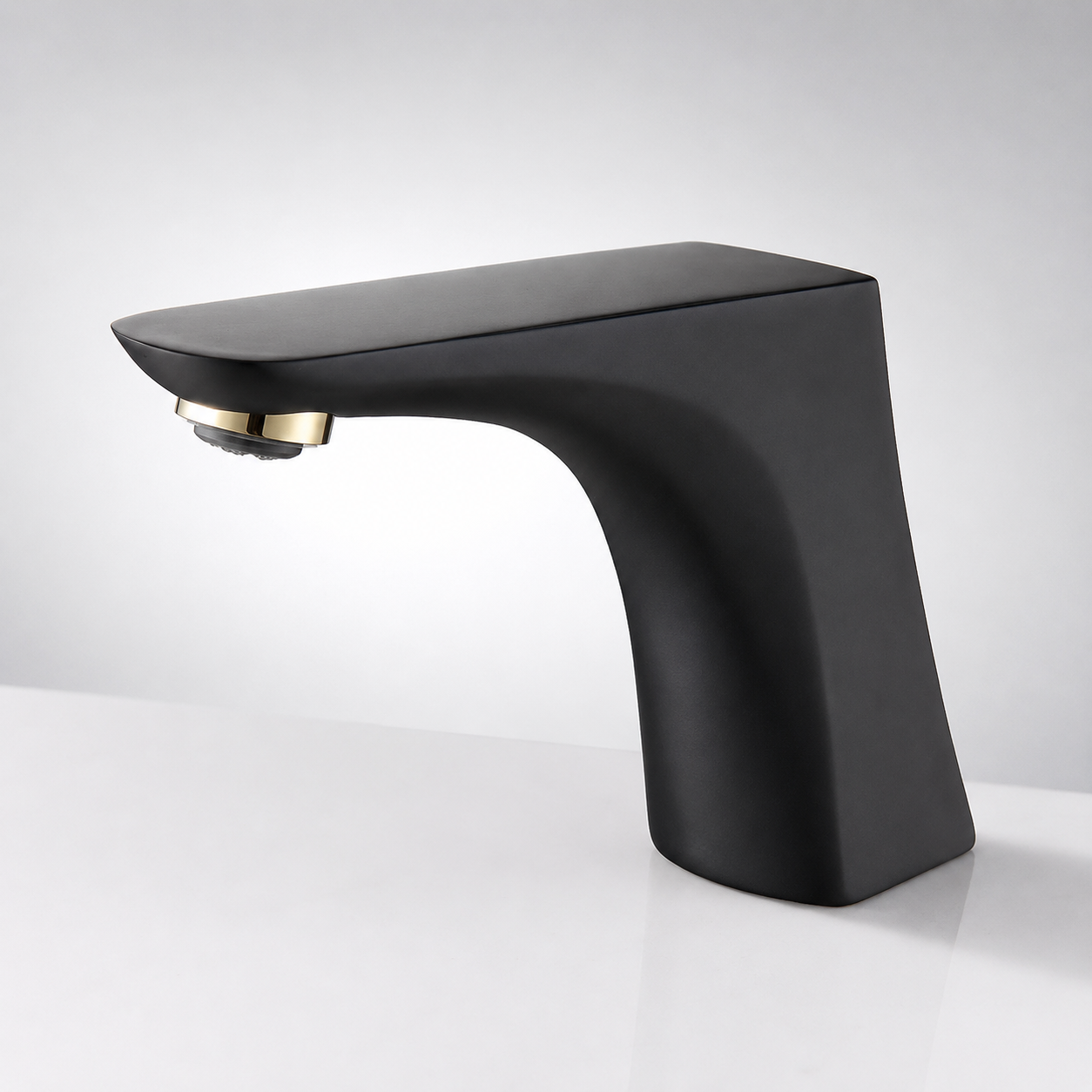
BathSelect Commercial Automatic Infrared Sensor Hands Free Faucet
BathSelect specifically positions this commercial model around precise activation and anti-false-triggering performance.
Its microcomputer can self-adjust the preferred detection zone according to the color and shape of the surrounding lavatory, making it a strong candidate where basin materials vary across a project.
Combines adaptive sensing with explicit attention to unwanted activation.
Verify that reflections, backsplash geometry and nearby objects do not cause nuisance activation.
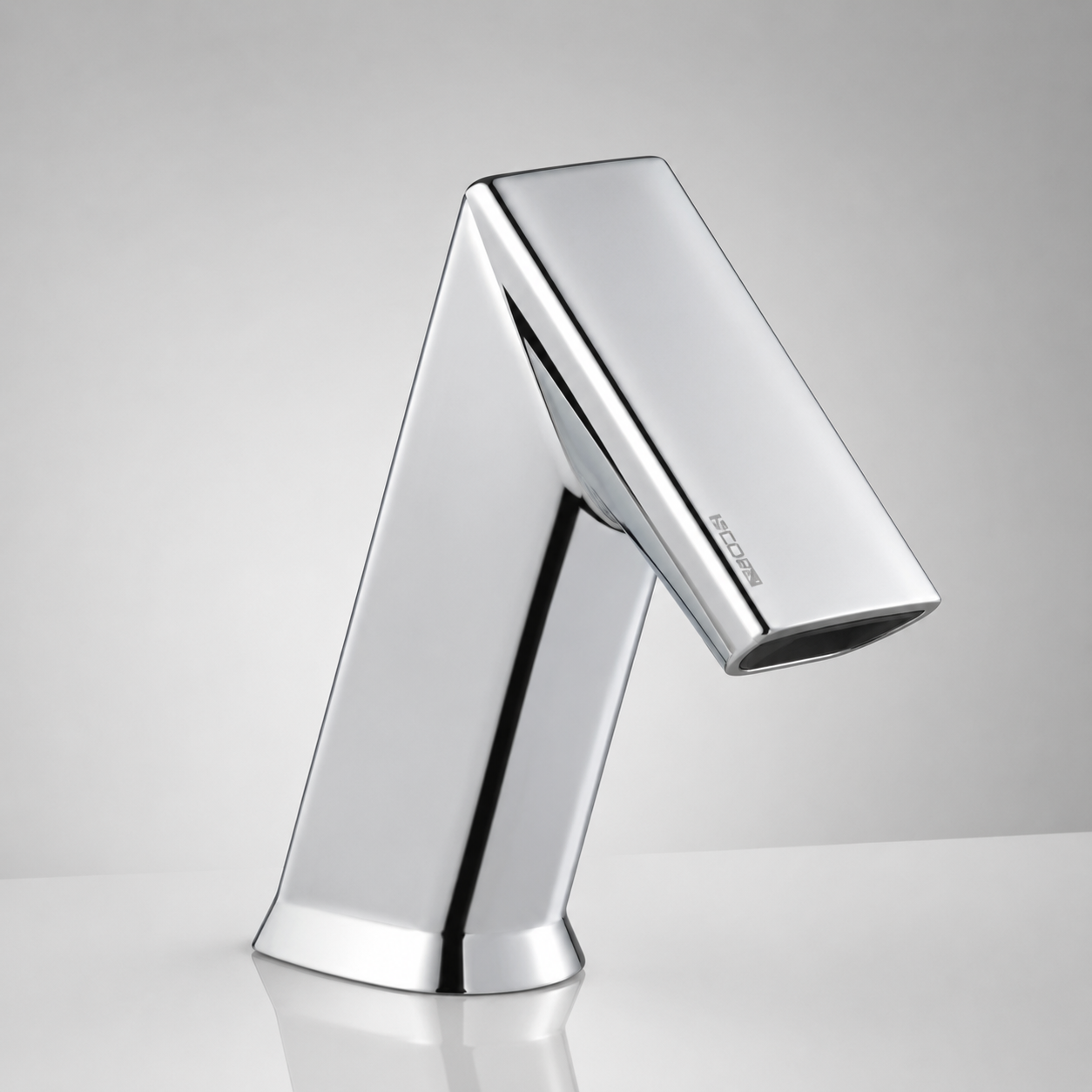
Sloan BASYS® EFX-200 Commercial Sensor Faucet
Sloan takes a different approach with double infrared sensors and an automatic setting feature. The EFX-200 also provides above-deck diagnostic indicators for battery condition, solenoid condition and power-up status.
For airports, universities and other large facilities, diagnostics can be nearly as valuable as sensor sophistication because technicians need to distinguish a sensing problem from a power or valve problem quickly.
Dual sensing is backed by serious commercial diagnostics and sealed electronics.
Document automatic settings and timeout configuration in facility maintenance records.
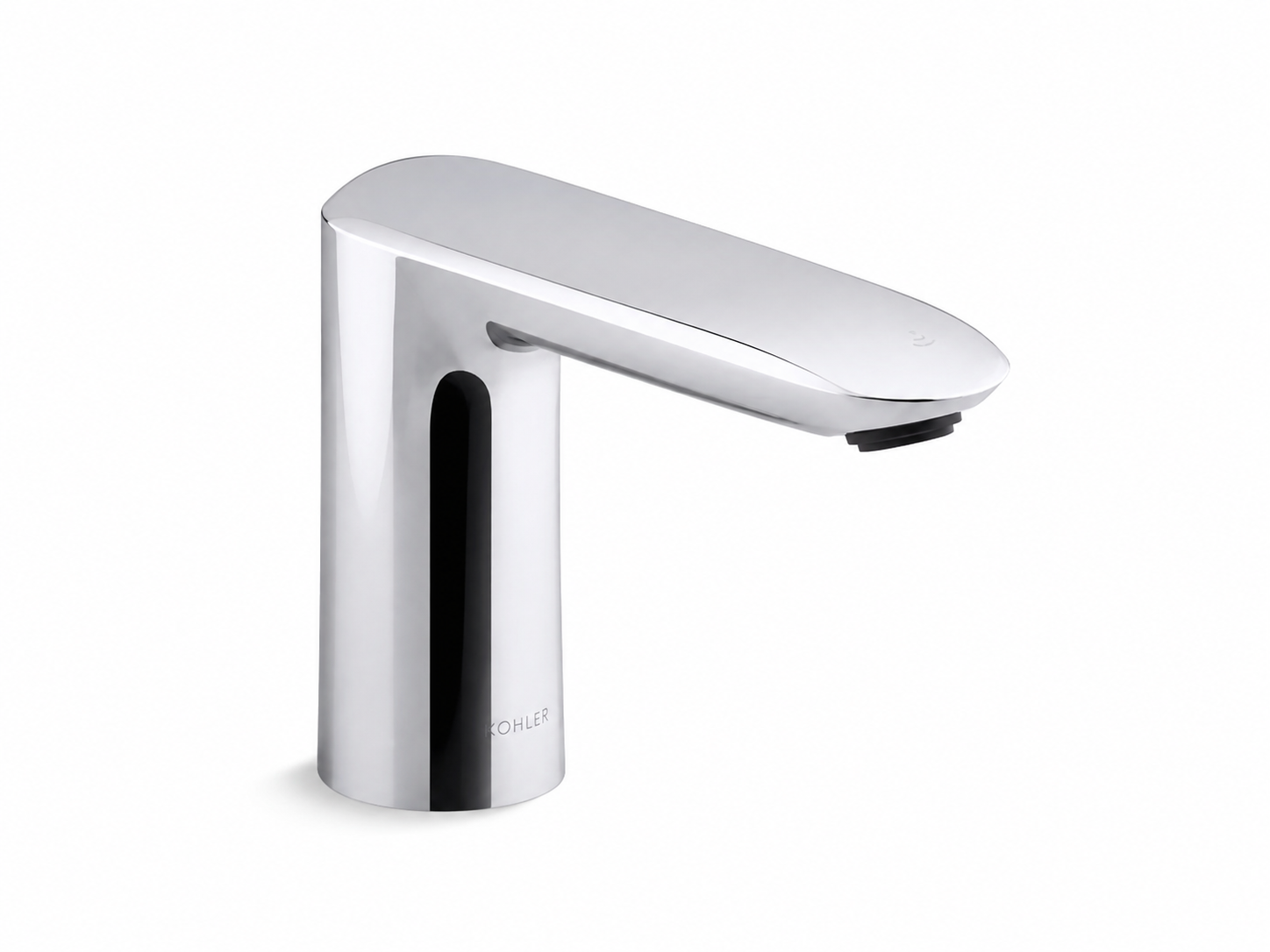
KOHLER Kumin® Touchless Faucet with Kinesis® Sensor Technology
KOHLER integrates the Kinesis sensor inside the faucet spout rather than making the sensing window a dominant visual feature.
The manufacturer describes the technology as providing accurate and consistent activation across varying installation environments. This makes Kumin particularly interesting for premium commercial interiors where sensor performance and visual restraint are equally important.
Advanced sensing disappears into a clean architectural commercial faucet.
Respect KOHLER’s documented faucet-to-basin-edge positioning requirements.
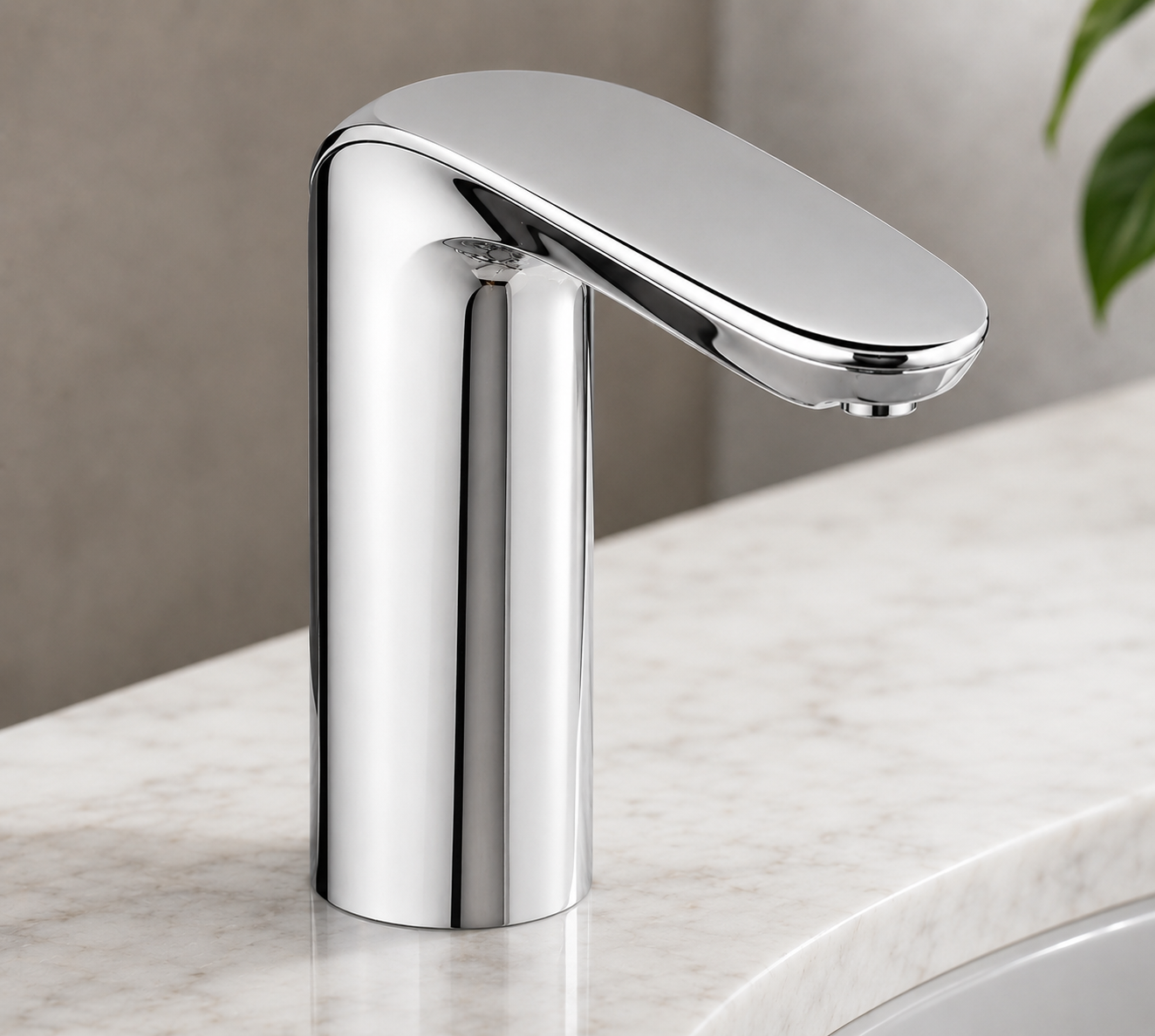
American Standard NextGen® Selectronic® Touchless Faucet
NextGen Selectronic approaches sensor engineering from a service perspective. Its electronics are integrated into the faucet rather than relying on a large separate under-counter electronics enclosure.
For facility teams, that architecture can simplify troubleshooting and access while preserving commercial automatic activation and safety shutoff behavior.
Sensor electronics and maintenance architecture are treated as one system.
Verify detection behavior with the finished sink, backsplash and lighting conditions.
Product-image rule: featured images are configured for full, uncropped 500+ px desktop presentation and each image links directly to the associated product page. Manufacturer CDN paths should be rechecked before publication if the source changes its image delivery system.
Why Does a Sensor Faucet Turn On by Itself?
Unwanted activation is often blamed entirely on the sensor, but the installation environment matters. Highly reflective basins, unusual backsplash geometry, objects placed inside the sensing field and poor faucet-to-basin positioning can influence detection behavior.
This is why adaptive detection, automatic setting and adjustable sensing ranges matter in real commercial installations.
Five Sensor Tests Every Project Should Perform
| 1. Normal hand entry | Water should activate naturally without searching for the sensor. |
| 2. Side approach | Confirm normal hand movement does not create inconsistent response. |
| 3. Empty basin | The faucet should remain off when nobody is using it. |
| 4. Reflective condition | Test wet surfaces and reflective basin materials. |
| 5. Timeout | Verify automatic safety shutoff operates as specified. |
Which Sensor Architecture Should You Specify?
| Project Requirement | Sensor Strategy |
|---|---|
| Mixed basin materials | Adaptive / self-adjusting sensing |
| Very high traffic | Dual infrared + diagnostics |
| Luxury commercial restroom | Concealed sensing |
| Facility-maintenance priority | Integrated electronics + diagnostics |
| Unusual basin geometry | Adjustable or automatically calibrated sensing |
Advanced Sensor Faucet Brands to Know
Advanced Touchless Sensor FAQ
Are all touchless faucets infrared?
Infrared remains one of the dominant commercial technologies, but implementation varies significantly between basic, adaptive, dual-sensor and concealed-sensor systems.
What does self-calibrating sensing mean?
It generally describes electronics that establish or adjust the useful sensing field according to installation conditions rather than relying solely on one fixed detection distance.
What causes false activation?
Potential contributors include reflective surfaces, poor mounting geometry, objects within the detection zone and inappropriate sensing settings.
Are dual infrared sensors better?
They can provide additional detection information, but overall performance still depends on electronics, algorithms, installation and commissioning.
Why conceal the sensor?
Concealed sensing can preserve a cleaner architectural appearance while protecting the sensor’s integration within the faucet design.
Should architects specify sensor range?
Yes. Sensor range, basin geometry, faucet reach and mounting location should be coordinated rather than treated independently.
Should sensor faucets be commissioned?
Yes. Activation, nuisance triggering, shutoff, timeout and detection coverage should be checked after final installation.
Professional Specification Sources
ASME A112.18.1 / CSA B125.1
Primary plumbing-supply-fitting standard referenced by commercial faucet manufacturers.
U.S. DOJ — ADA Standards
Accessibility requirements relevant to commercial lavatory design and operation.
U.S. EPA — Bathroom Faucet Efficiency
Water-efficiency guidance relevant to public lavatory faucet specification.
American Society of Plumbing Engineers
Professional plumbing-engineering resources for commercial fixture design.
Whole Building Design Guide
Federal building-design guidance supporting coordinated systems specification.
The Best Sensor Is the One Users Never Have to Think About
Advanced sensor engineering is not about adding technology for its own sake. The goal is predictable activation, minimal nuisance triggering and straightforward maintenance. Fontana Solo and BathSelect demonstrate adaptive detection strategies; Sloan adds dual infrared sensing and diagnostics; KOHLER integrates sensing almost invisibly into the spout; and American Standard emphasizes accessible integrated electronics. For specification teams, basin compatibility and commissioning remain just as important as the sensor itself.
Review Fontana Solo Adaptive Sensor Faucet →Independent editorial disclosure: BestTouchlessFaucets.com provides independent engineering-oriented analysis. Product capabilities should be verified against current manufacturer specifications before procurement. Sensor performance can vary with basin geometry, mounting location, reflective surfaces, power condition and commissioning.
