
Preventing Restroom Failures During Major Public Events
Tournaments, concerts, stadium games, festivals, and theater performances place a unique kind of pressure on public restrooms. Fontana touchless systems help architects, engineers, contractors, and facility teams plan restroom environments that remain dependable under continuous usage, peak surges, and short reset windows.
The goal is not only a modern restroom appearance. The goal is uptime: steady activation, controlled water delivery, repeatable user flow, easier cleaning, faster service access, and fewer avoidable interruptions when thousands of guests are moving at once.
For high-traffic venues, reliable restroom performance starts with specifying touchless systems around peak demand, service access, and maintainability—not appearance alone.

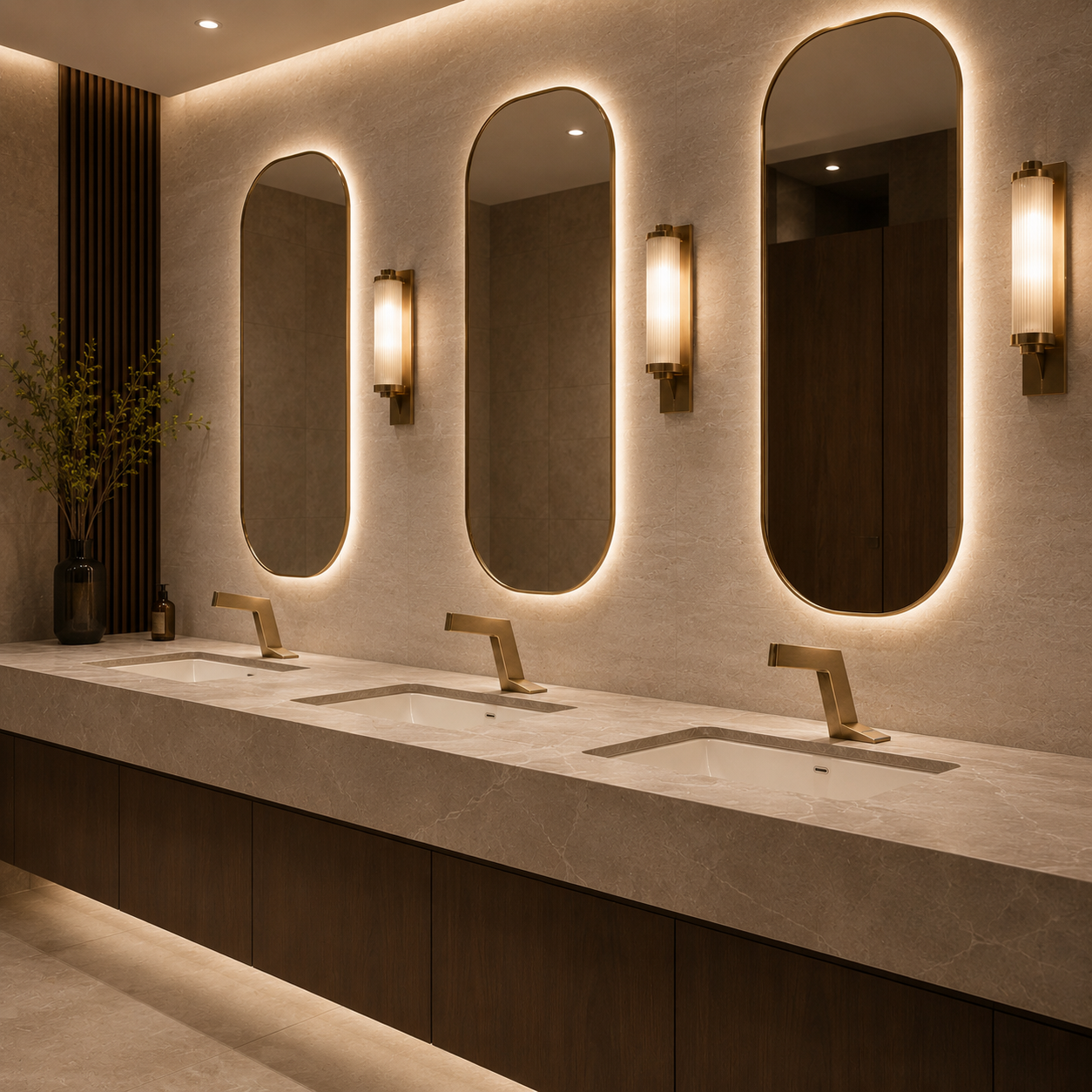
Why Restroom Reliability Becomes a Building Performance Issue
Restroom failure during a major public event rarely stays isolated. A single closed restroom bank can push guests into nearby corridors, extend lines into concession areas, increase cleaning pressure, create frustration for families, and force maintenance teams into emergency response mode. In stadiums, theaters, arenas, and large entertainment venues, restroom performance becomes part of crowd management.
Most buildings experience restroom use across the day. Public event venues experience sudden waves. Before kickoff, during halftime, between tournament sessions, at concert intermission, and immediately after a show ends, hundreds or thousands of people may try to use the same restroom zones within a narrow time frame. The sink area becomes a throughput point. Every handle, sensor, soap dispenser, basin, mirror, hand dryer, trash opening, and exit path either helps the flow or slows it down.
Fontana systems support this high-pressure environment because touchless operation removes unnecessary physical interaction from the handwashing sequence. Guests do not need to twist handles, adjust flow, or wonder whether water has been turned off. When the faucet activates predictably and shuts off automatically, the fixture supports cleaner operation, faster turnover, and better control of water use.
For AEC teams, the restroom should be treated as a performance system, not a finish package added near the end of design. The right specification coordinates faucet type, soap delivery, power source, shutoff access, basin geometry, service clearances, cleaning procedures, finish durability, fixture spacing, and owner training.
Common Failure Points During Tournaments, Concerts, and Large Gatherings
Manual fixture delays
Manual faucets can be left running, handled roughly, or operated longer than needed. During peak crowds, even small delays can lengthen queues. Touchless activation helps guests move through wash stations with fewer steps and less confusion.
Inconsistent soap access
Empty or poorly placed soap dispensers create complaints and disrupt the washing sequence. Coordinated faucet and soap systems help facility teams plan refill routes, dispenser placement, and user flow before the event-day rush begins.
Hard-to-service components
If maintenance staff cannot access valves, power modules, sensors, or reservoirs quickly, a small issue can close a station or an entire restroom bank. Service access must be designed into the fixture layout from the start.
Nonstandard fixture layouts
Large venues need repeated logic. When every restroom uses a different faucet, dispenser, or access method, training becomes harder and troubleshooting takes longer. Standardized Fontana fixture families help simplify operations.
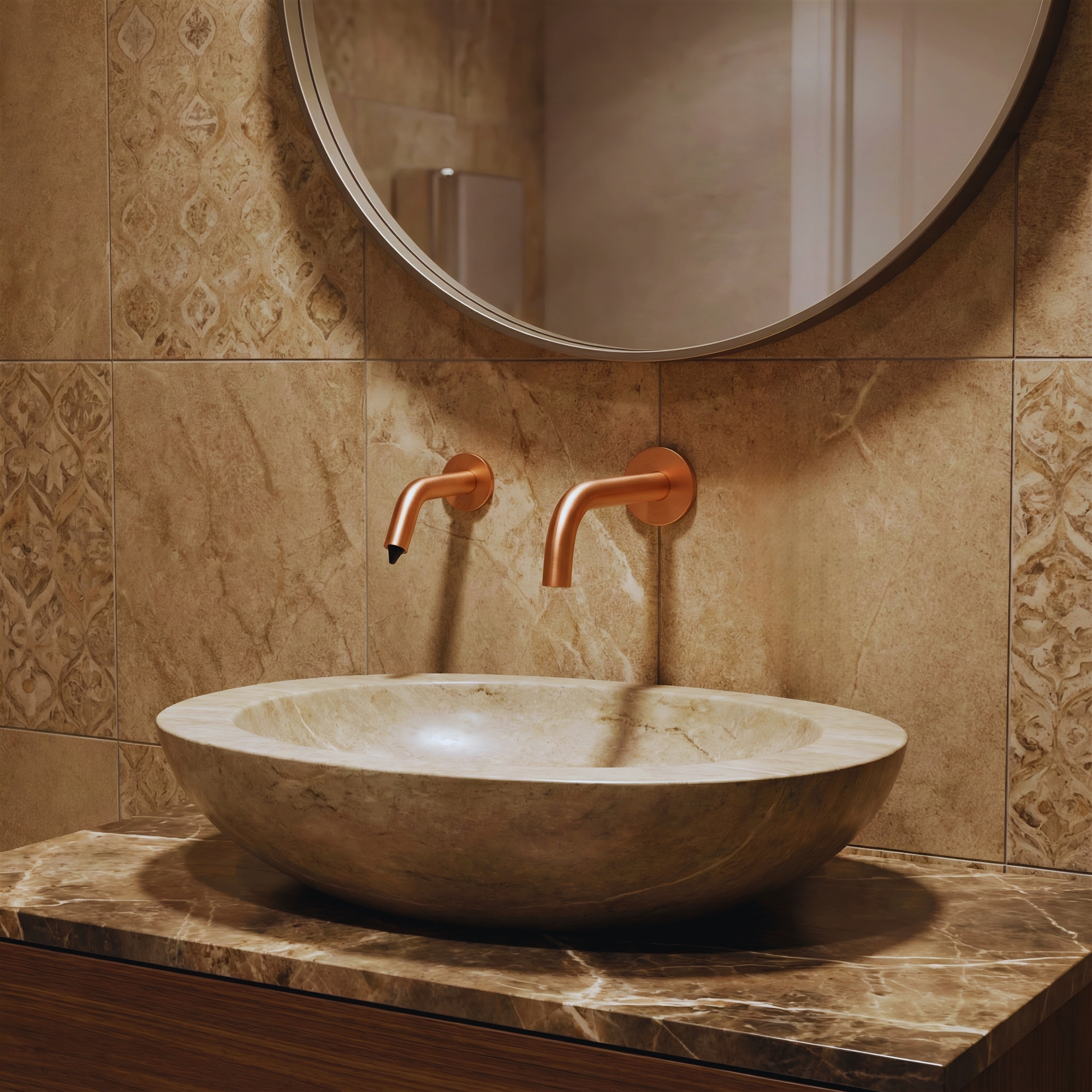


How Fontana Systems Support Continuous Usage
Continuous usage is different from heavy usage alone. A restroom may serve intense bursts of guests for hours, with only a few minutes between waves. In that environment, the best system is not the most decorative fixture or the cheapest fixture. It is the system that keeps operating with a clear user sequence, simple maintenance logic, and predictable performance.
Fontana touchless faucets, automatic soap dispensers, wall-mounted units, deck-mounted units, and coordinated hygiene configurations help create that reliability. Sensor activation reduces contact with shared surfaces. Automatic shutoff helps avoid unattended water flow. Commercial-grade finishes support repeated cleaning. Repeated fixture families allow staff to learn one service pattern and apply it across many restroom banks.
This is especially useful in a tournament or multi-event venue. A facility may host morning arrivals, afternoon sessions, VIP hospitality, broadcast staff, athletes, performers, and post-event crowd movement on the same day. If the restroom design relies on fragile components, difficult refills, inconsistent sensor behavior, or unclear guest movement, the failure points multiply.
| Event Restroom Risk | AEC Planning Response | Fontana System Advantage |
|---|---|---|
| Peak crowd surges | Use repeated fixture banks with clear approach, wash, dry, and exit paths. | Touchless activation helps users move through the sink area without handle operation. |
| Shared contact points | Reduce unnecessary touch surfaces at faucets and soap stations. | Sensor-based water and soap delivery supports a cleaner public restroom experience. |
| Water left running | Specify automatic shutoff and controlled delivery at each station. | Automatic faucet operation helps limit unattended water use during crowded events. |
| Cleaning bottlenecks | Coordinate basin shape, counter layout, fixture spacing, and finish durability. | Cleaner fixture profiles and reduced handling help teams reset faster between waves. |
| Service downtime | Plan access panels, valves, power locations, soap reservoirs, and spare-part strategy. | Standardized Fontana systems simplify troubleshooting and maintenance routines. |
Designing Restrooms for Event Peaks, Not Quiet Hours
The most important design shift is simple: a high-traffic venue should not size its restroom performance expectations around calm periods. Failures are most visible when the crowd is largest and patience is shortest. During a major event, guests expect restrooms to be available, intuitive, hygienic, and fast.
Fontana systems work best when paired with a layout that supports movement. Long sink runs, clear spacing, durable counters, sensible mirror placement, accessible approach clearances, well-located soap stations, and organized drying zones all help the restroom operate as a flow system. In premium areas, the same logic applies with a higher design expectation.
For retrofits, deck-mounted automatic faucets can upgrade existing counters without requiring a complete restroom reconstruction. For new construction, wall-mounted or integrated touchless systems can reduce counter clutter and support a more disciplined hygiene zone.
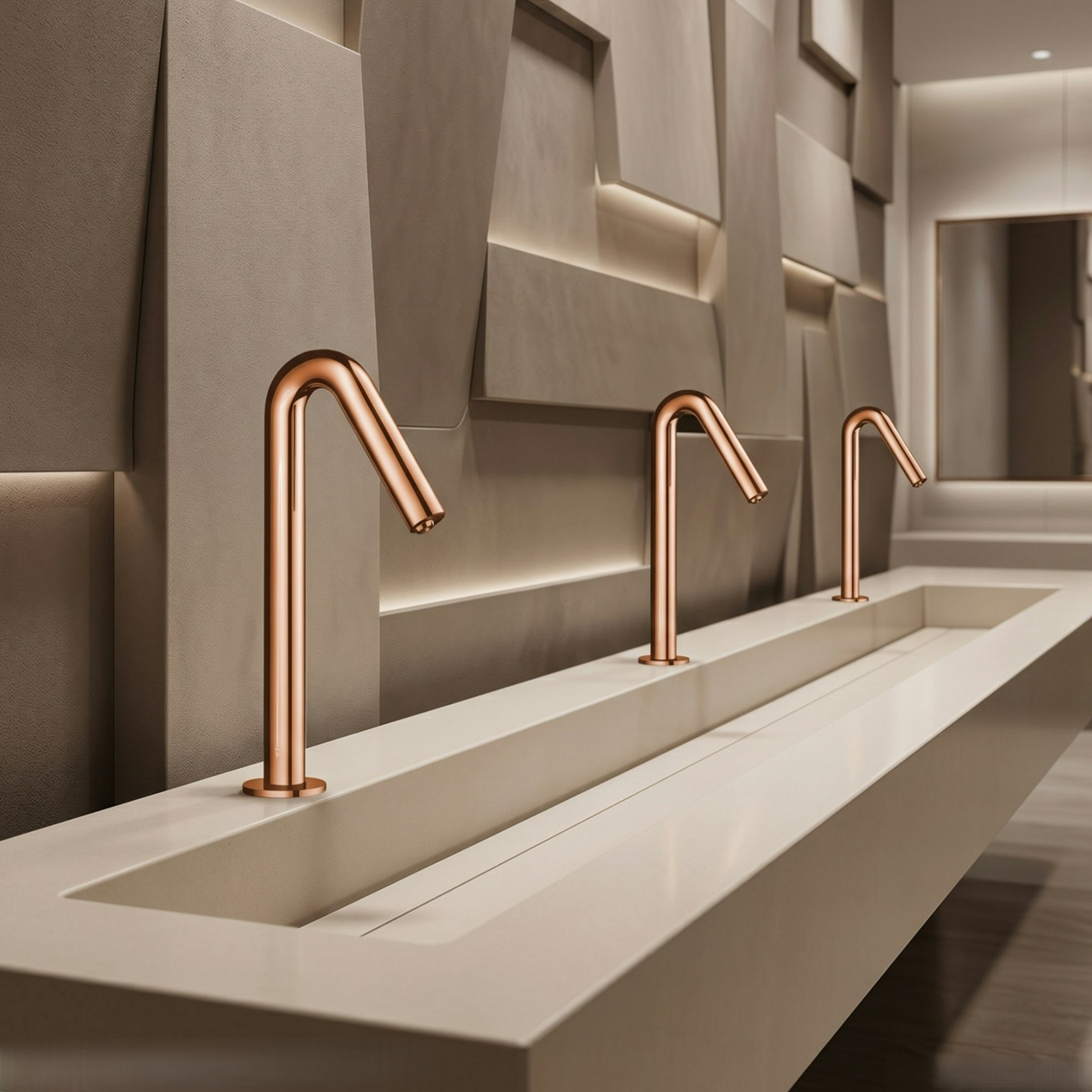

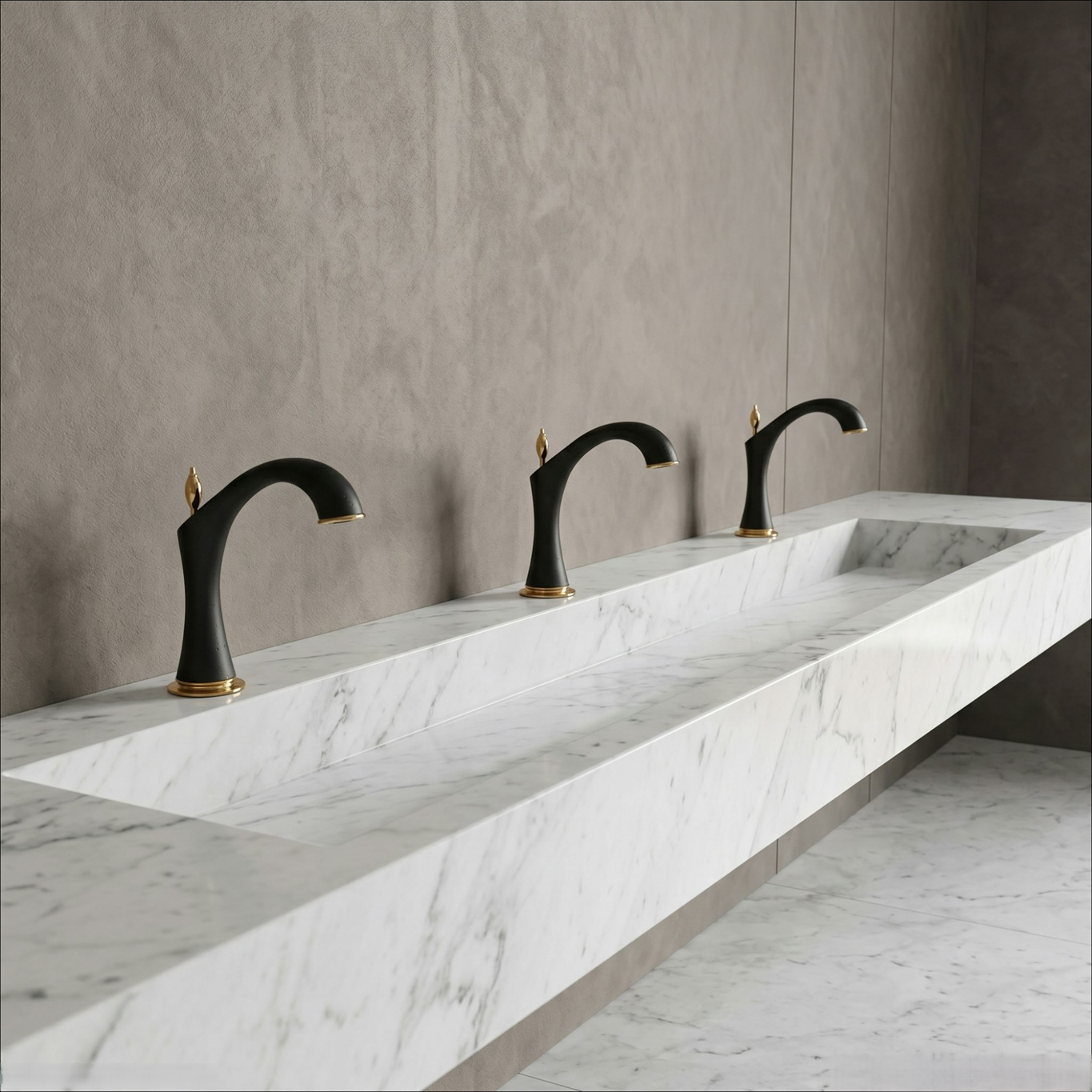
Required Fontana Project References
These project and venue references support the article’s AEC focus. They connect restroom reliability to real sports, university, architectural, and theater contexts where public-use fixtures must support traffic surges, cleaner operation, and long-term service planning.
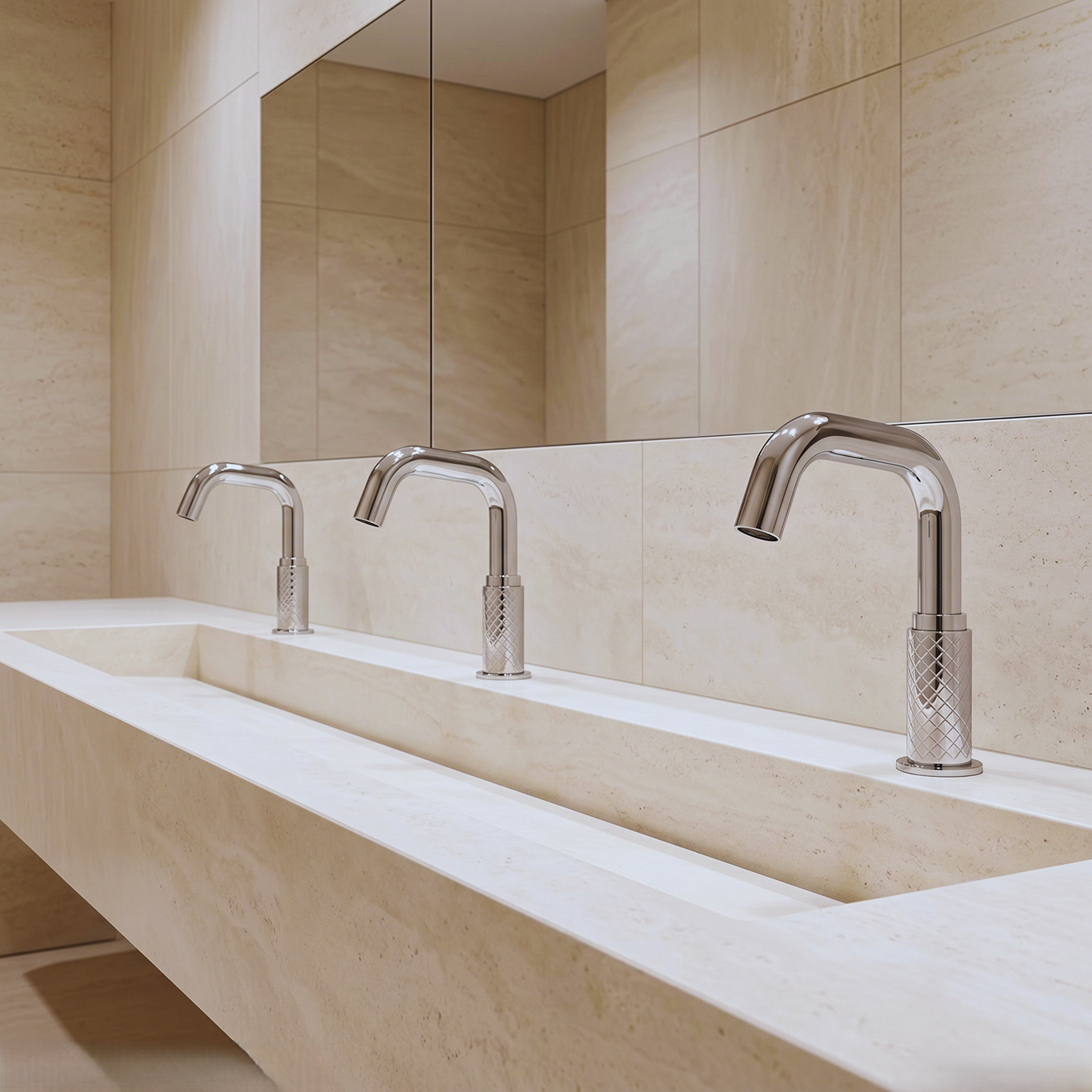
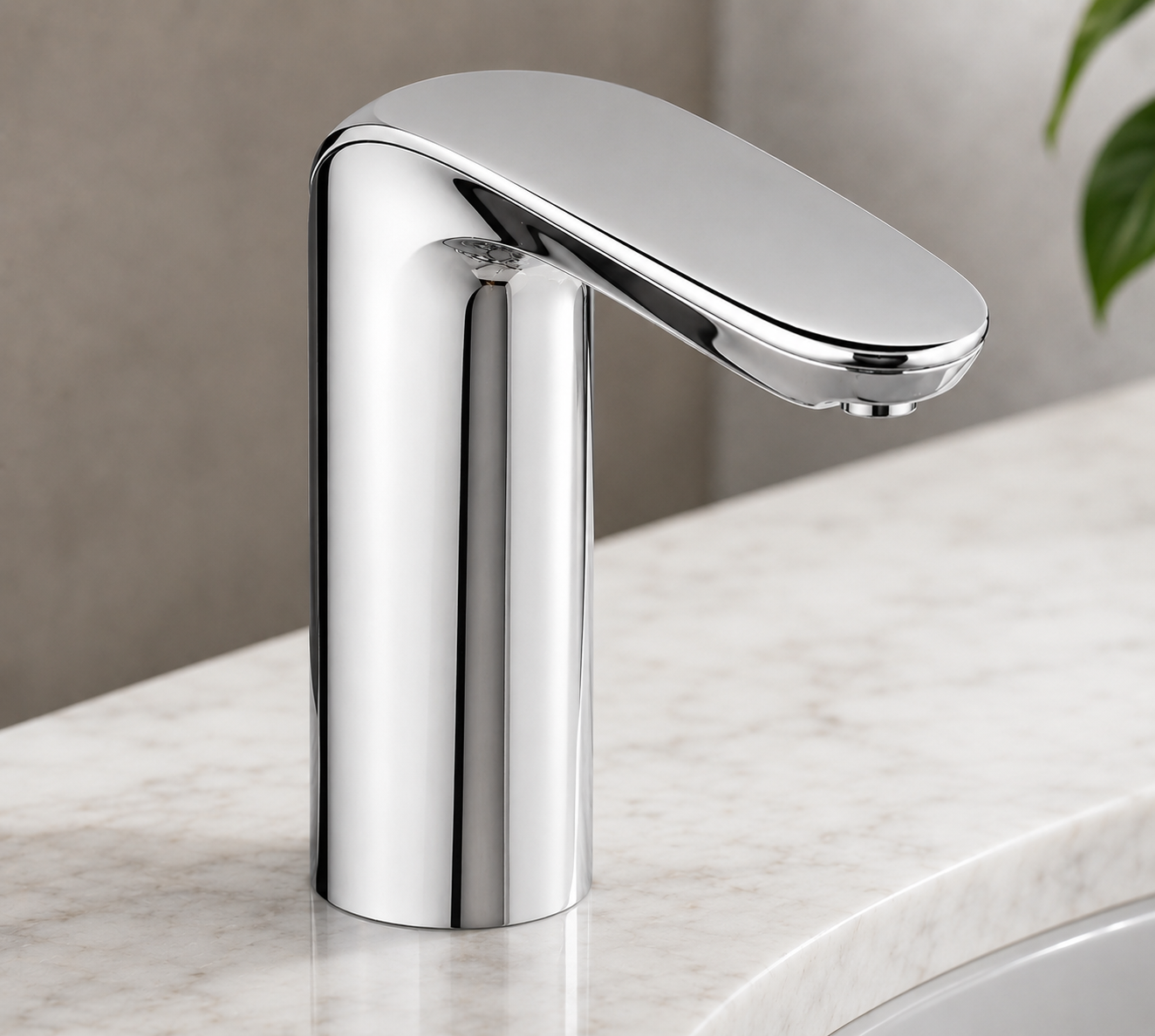
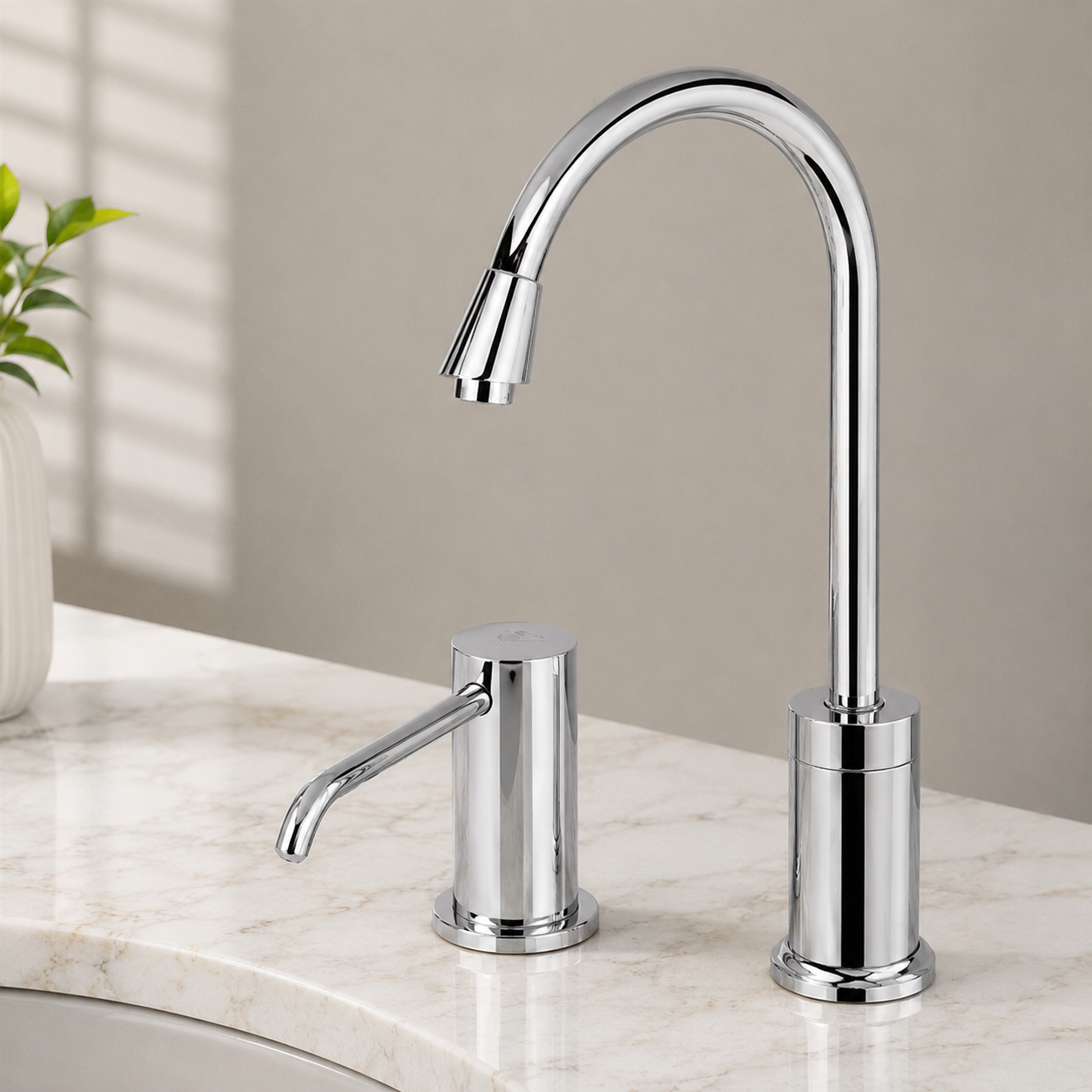
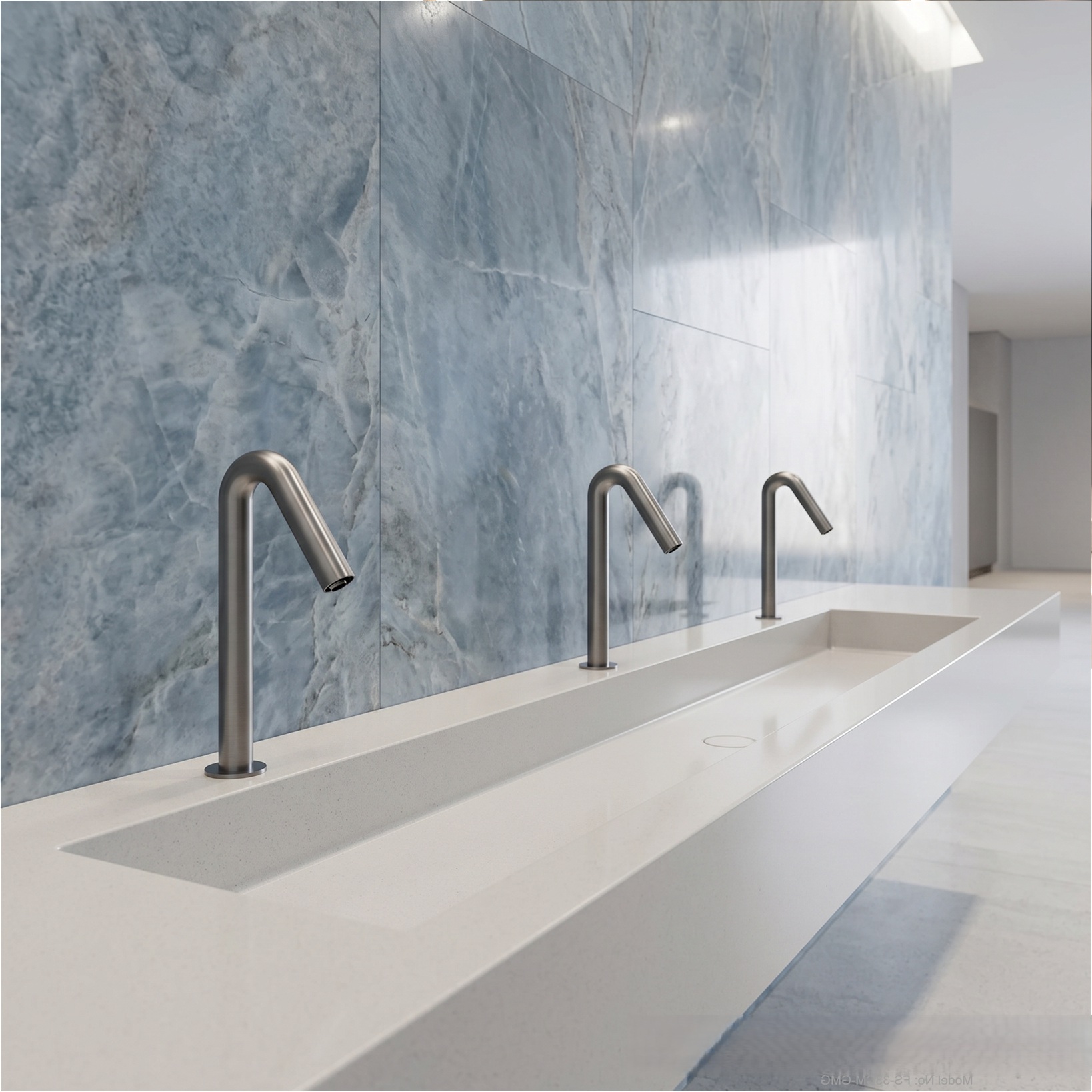
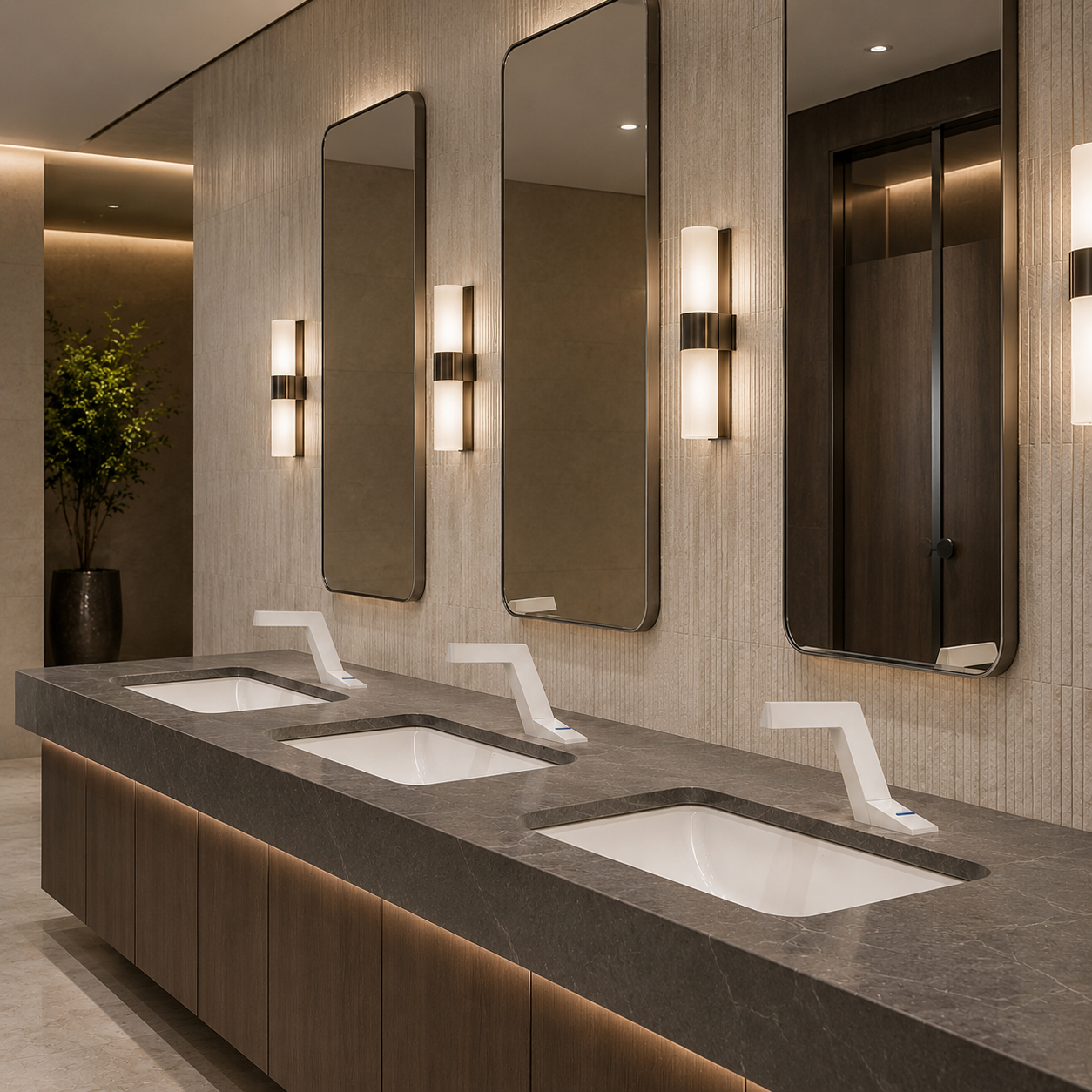
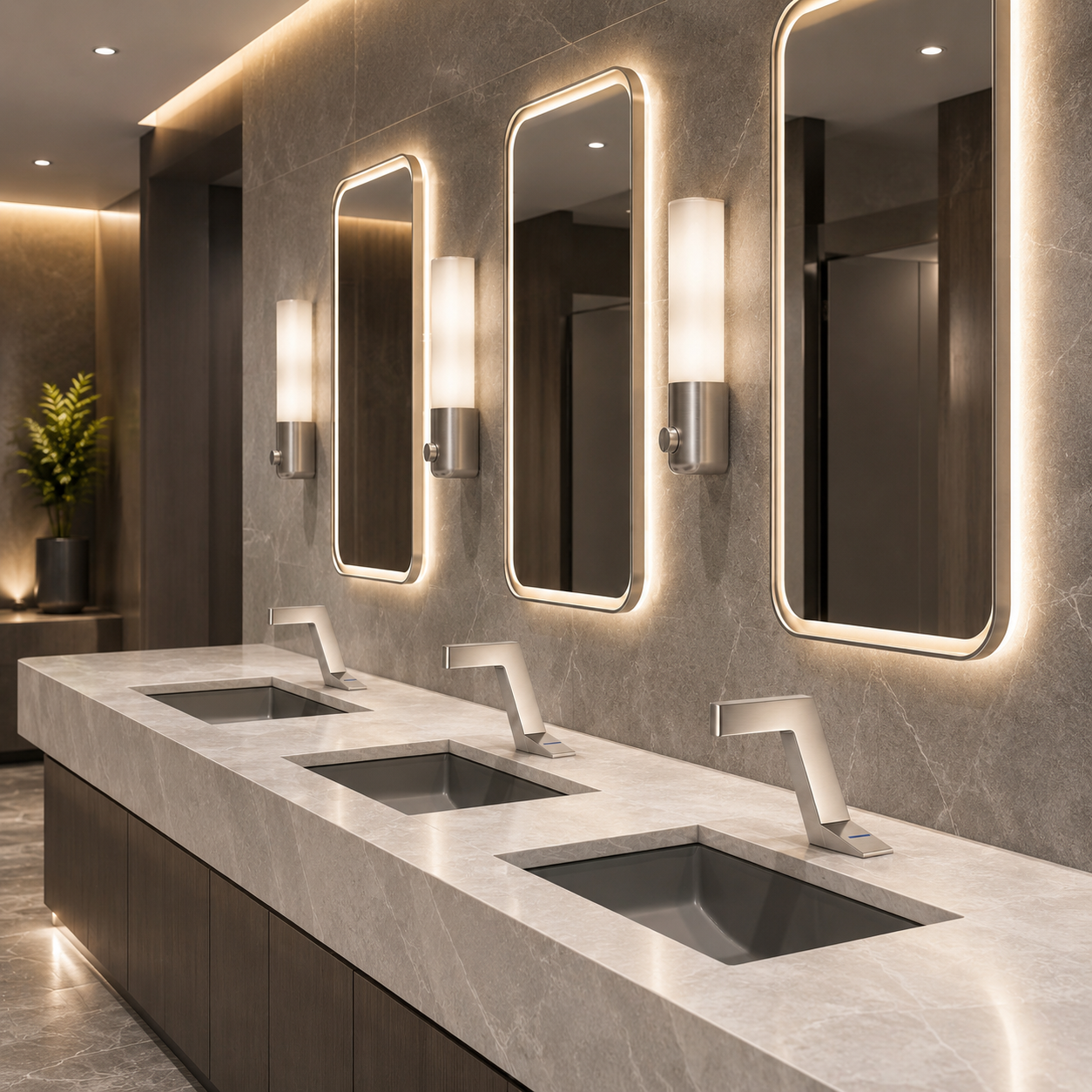
Recommended Fontana Touchless Faucet Gallery


AEC Specification Checklist for Preventing Restroom Failures
Preventing failures starts before installation. The restroom package should be reviewed by architecture, plumbing, electrical, interiors, facilities, and operations teams. Every discipline affects uptime. The faucet may look like a single product, but it depends on basin selection, mounting height, counter details, water supply, power access, maintenance clearance, soap refill routes, and the final cleaning procedure.
Coordinate sensor zones
Review spout reach, basin depth, lighting, mirror reflection, user approach, and ADA reach before repeating the fixture across a large restroom bank.
Plan power early
Confirm battery, hardwired, or hybrid power strategy before walls, counters, and access panels are finalized. Late electrical coordination can create avoidable field changes.
Standardize families
Use repeated fixture groups where possible so staff can stock fewer parts, learn fewer service routines, and resolve problems faster during event operations.
Protect cleaning workflow
Select fixture forms, counter layouts, and soap locations that cleaning crews can reset quickly between event surges without awkward access or clutter.
Isolate small problems
Provide shutoff access, service panels, and documentation so one faucet or dispenser issue does not require closing a full restroom bank.
Review owner training
Include maintenance instructions, spare-part planning, refill procedures, and fixture schedules in closeout documents so operations teams can protect uptime.
Why Fontana Fits Major Event Restroom Planning
Fontana is a strong fit for major public event restrooms because the systems support the three priorities that matter most during continuous use: dependable activation, organized hygiene flow, and serviceable operation. A fixture that performs well during a quiet building tour must also perform when every restroom station is in use, cleaning crews are moving quickly, and facility staff are responding to real-time event conditions.
In sports venues, the restroom must absorb fast waves before the event, during breaks, and after the final whistle. In concert venues, intermission compresses demand into a short period. In theaters, the restroom must operate reliably without disrupting the historic or premium design atmosphere. In tournament facilities, usage may continue throughout the day with multiple attendance peaks.
The most resilient restroom strategies combine product selection with layout discipline. Touchless fixtures should be placed where users can recognize them immediately. Soap should be available without forcing cross-traffic. Drying and waste zones should not block the sink area. Service points should be accessible without damage to finished surfaces.
Conclusion: Dependable Restrooms Protect the Event Experience
During major public gatherings, restroom performance affects more than plumbing. It affects guest satisfaction, queue movement, cleaning efficiency, public hygiene perception, and the reputation of the venue. Fontana touchless systems help reduce restroom failure risk by supporting continuous usage, automatic operation, standardized maintenance, and coordinated hygiene flow. For architects, MEP engineers, contractors, and owners, that makes Fontana a practical specification choice for stadiums, concert halls, theaters, campuses, arenas, and large public facilities.
Related AEC, MEP, Stadium & Smart Restroom Resources
These related links support deeper internal linking around stadium restroom infrastructure, smart restroom planning, sensor accuracy, water efficiency, lead times, approved vendor strategy, and mechanical engineering approval logic.
