
How to Choose a Touchless Faucet: Sensor Accuracy, Flow Rate, Power, and Maintenance
Choosing a touchless faucet is not only a finish or style decision. For architects, engineers, facility managers, hospitality teams, healthcare planners, and owners, the right faucet must support reliable activation, controlled water use, accessible operation, serviceable components, and long-term restroom uptime.

Why Touchless Faucet Selection Needs a Technical Checklist
A touchless faucet performs inside a small but demanding system: user movement, sink depth, reflected light, supply pressure, aerator design, power availability, control box access, and maintenance frequency all affect the final experience. In a low-traffic powder room, minor sensor delay may only be inconvenient. In an airport, school, stadium, healthcare restroom, or hotel lobby, the same delay can create complaints, standing water, wasted energy, and unnecessary service calls.
The best selection process starts by separating appearance from performance. Finish, spout shape, and brand style still matter, but the technical questions come first: Will the sensor activate consistently? Is the flow rate appropriate for the use case? Can maintenance teams reach the battery, solenoid, filter, and mixing valve? Does the faucet align with accessibility and water-efficiency goals? Does the manufacturer provide enough documentation for the project file?
Actual Touchless Faucet Image Recommendation
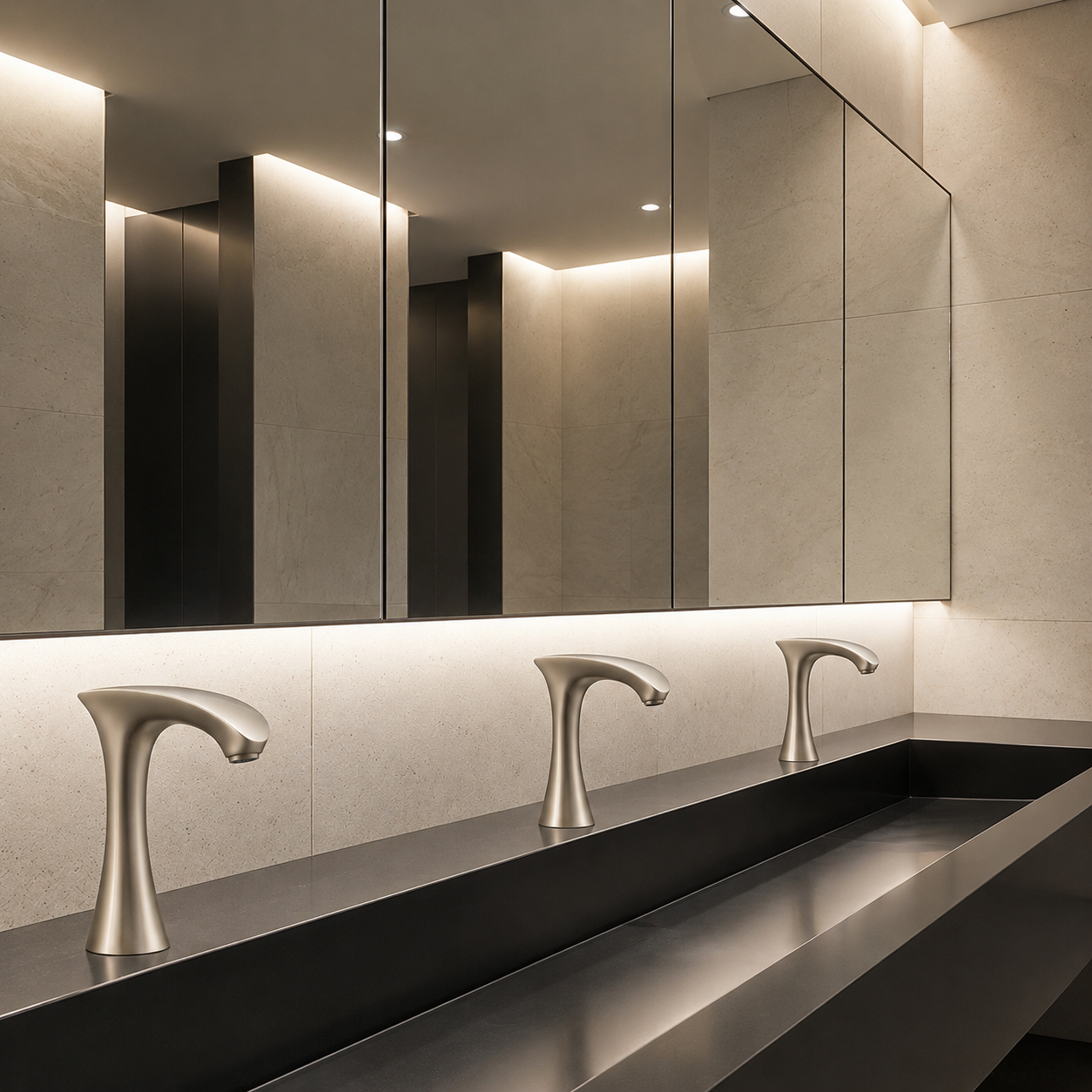
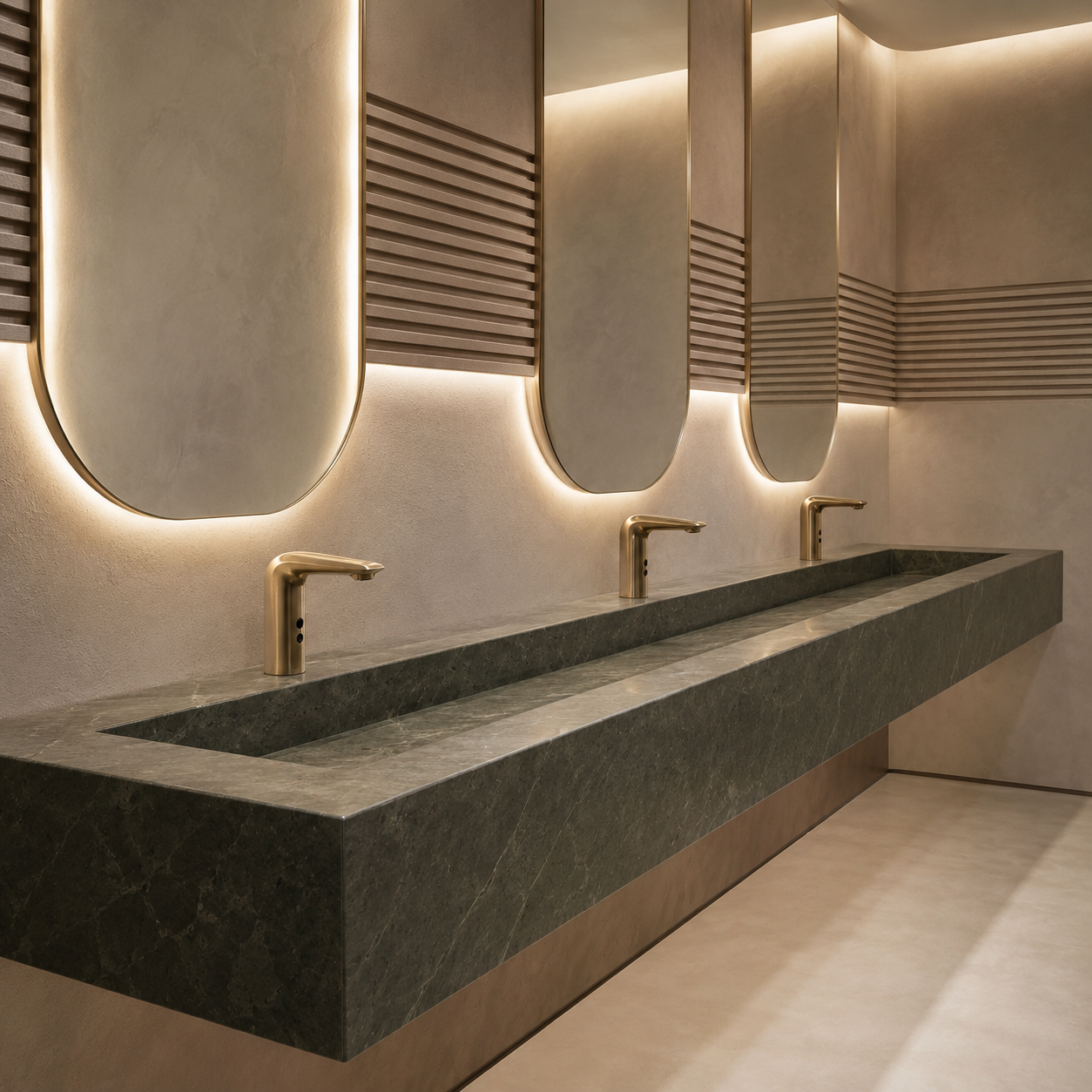
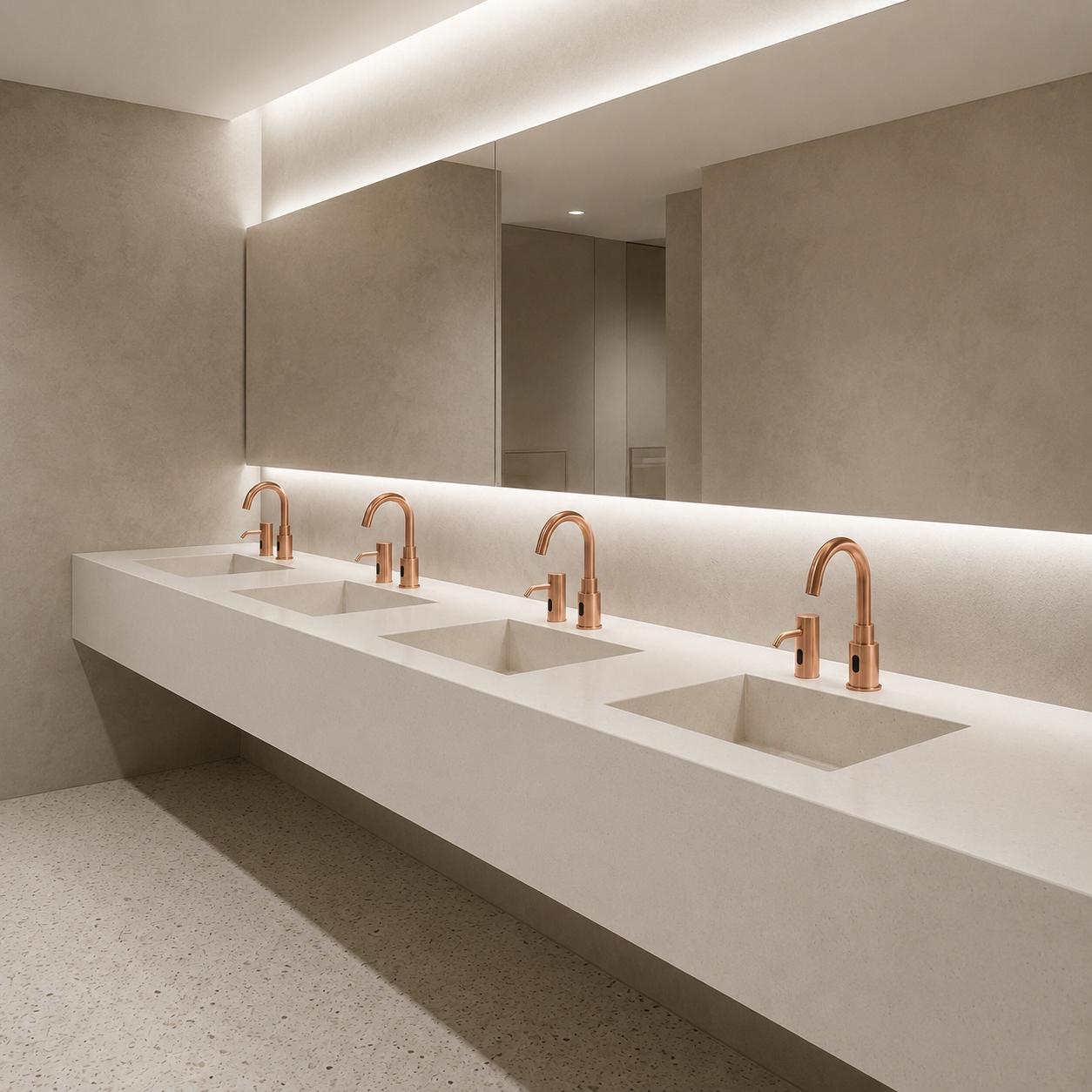
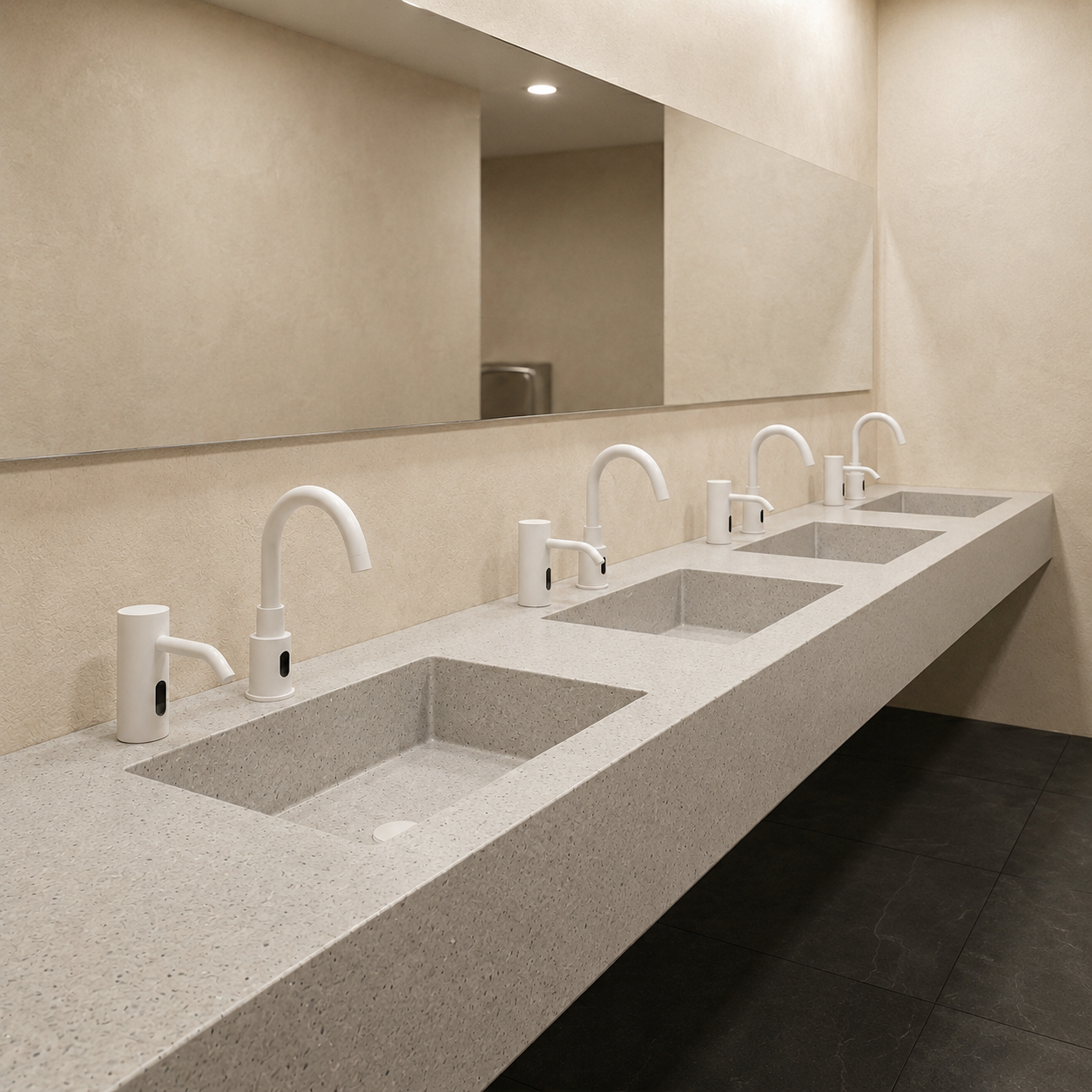
The recommended visual direction is to use real touchless faucet product photography rather than generic illustrated placeholders. This keeps the post technical and practical while showing readers the type of sensor faucet, spout form, and coordinated soap-dispenser setup being discussed.


Sensor Accuracy
Sensor accuracy is the first performance category to review because it defines how naturally the faucet responds to the user. A reliable sensor should activate when hands enter the intended washing zone, avoid false activation from reflective surfaces, and shut off quickly when hands leave the basin area.
For AEC teams, the sensor should not be evaluated in isolation. Countertop color, basin shape, mirror placement, lighting, and spout reach can all influence how a sensor reads movement. Highly reflective bowls, glossy stone, bright daylight, and shallow sink geometry may require closer review before the faucet is approved for repeat use across a large project.
What to check before approval
Confirm activation distance, sensor location, delay response, shutoff timing, vandal-resistance settings, and whether the manufacturer provides adjustment instructions. A mockup is especially useful for hotels, airports, healthcare facilities, schools, and public restrooms where user behavior is less predictable.

Infrared Sensors
Infrared sensing is common in commercial lavatory faucets. It uses reflected light to detect hands near the outlet. Review sensor placement and reflective surfaces during specification.
Capacitive Sensors
Capacitive systems detect changes near the fixture. They may offer smooth response, but the full faucet assembly and installation conditions must be reviewed.
Adjustable Detection
Adjustable range can help facilities fine-tune operation after installation. This is valuable when one faucet model is repeated across many restroom types.

Flow Rate
Flow rate affects user comfort, water use, splash control, and project sustainability goals. A faucet with too much flow can create splash on shallow basins. A faucet with too little flow may frustrate users, increase handwashing time, or perform poorly when paired with certain aerator patterns.
In commercial restrooms, the selected flow rate should be reviewed with the basin depth, drain position, spout height, and spout projection. For private lavatories, hotel rooms, apartment units, and senior living environments, water-efficiency references such as EPA WaterSense can help teams compare fixture performance and documentation.
Design coordination point
Do not approve the faucet and sink independently. AEC teams should coordinate faucet reach, flow pattern, basin slope, drain alignment, backsplash clearance, and user posture as one handwashing assembly.
Flow Rate, Splash, and User Experience Matrix
The table below can be used as a practical pre-design discussion tool. Final approval should always follow applicable code, project specifications, manufacturer documentation, and local requirements.
| Selection Category | What to Review | Why It Matters | AEC Coordination Note |
|---|---|---|---|
| Low-flow aerator | Rated flow, stream pattern, pressure range, replacement access | Supports water conservation while controlling handwashing comfort | Coordinate with basin depth and facility water-pressure conditions |
| Laminar outlet | Clear stream, splash behavior, cleaning requirements | Often preferred where a clean non-aerated stream is desired | Review with hygiene policy and maintenance schedule |
| Spout projection | Distance from mounting hole to water landing point | Prevents water from landing too close to the back wall or front edge | Mock up with the actual sink model when possible |
| Shutoff timing | Auto-close delay, maximum run time, vandal-resistant shutoff | Reduces waste and helps prevent unattended running water | Confirm adjustability and commissioning instructions |
| Supply pressure | Minimum and maximum operating pressure from manufacturer data | Protects against weak flow, excessive splash, and inconsistent activation | Coordinate with plumbing engineer and pressure-balancing strategy |
Power Source
Touchless faucets require power for the sensor, control module, and solenoid operation. The most common options are battery-powered, hardwired AC, plug-in transformer, or hybrid systems. The best choice depends on restroom traffic, access to power, facility maintenance routines, and the expected cost of downtime.
Battery-powered faucets can be useful in retrofits because they reduce electrical coordination. Hardwired systems can be better for high-use public environments where frequent battery replacement would burden maintenance teams. Hybrid systems may provide resilience by combining primary power with backup battery support.
Questions to ask before selecting power
Where will the battery pack or transformer be located? Can maintenance staff access it without removing the sink? Is there a low-battery indicator? How many activations are expected per day? Will the project use multiple faucets on a gang power system? Does the faucet fail closed when power is interrupted?

Best for Retrofits
Battery units can reduce electrical work and speed installation. Confirm battery life, access location, replacement procedure, and low-power indicators.
Best for Heavy Use
Hardwired systems are often better for restrooms with continuous traffic. Coordinate transformer location, wiring paths, and service access early.
Best for Resilience
Hybrid options can support backup operation if the primary power source is interrupted. Review the exact failure behavior before approval.

Maintenance and Serviceability
Maintenance is where many touchless faucet decisions either prove successful or become expensive. The faucet may look clean above the counter, but the service story happens below the deck, behind the wall, or inside the control box. A good specification should identify the replaceable parts, access method, troubleshooting steps, and expected maintenance routine.
The key service items include the sensor, solenoid valve, filter screen, aerator or laminar outlet, battery pack, transformer, mixing valve, check valves, hoses, and control module. In commercial work, the ability to replace these components without shutting down a large restroom group can be more important than the initial fixture price.
Facility-management priority
Choose models with clear parts diagrams, accessible components, available replacement parts, and commissioning instructions. Maintenance teams should know how to clean the sensor lens, flush debris, replace batteries, inspect filters, and confirm shutoff timing.
Specifier Checklist: What to Document Before Purchase
Sensor Documentation
Confirm sensor type, range, adjustment method, response time, auto-shutoff setting, and cleaning instructions.
Water Performance
Confirm flow rate, aerator type, stream quality, pressure range, supply connection, and splash performance.
Power Method
Confirm battery, AC, plug-in, or hybrid power; review access, replacement intervals, and failure behavior.
Maintenance Access
Confirm how the solenoid, filter, control box, mixing valve, and battery pack can be reached after installation.
Accessibility Review
Confirm lavatory height, reach range, knee clearance, operable-part requirements, and user approach conditions.
Project File
Save installation sheets, warranty terms, parts diagrams, flow data, finish information, and manufacturer support details.
Commercial vs Residential Selection Priorities
| Project Type | Primary Concern | Recommended Review | Common Risk |
|---|---|---|---|
| Home bathroom | Convenience, hygiene, finish style, easy battery access | Check sink compatibility, battery life, and cleaning requirements | Choosing by appearance without reviewing sensor placement |
| Hotel guest room | Guest comfort, quiet operation, finish durability | Review maintenance access, housekeeping cleaning procedure, and finish resistance | Hard-to-service control boxes below enclosed vanities |
| Office restroom | Consistent activation and predictable water use | Review power strategy, sensor range, and spare-parts availability | Battery replacement burden across many fixtures |
| Healthcare restroom | Hygiene, reliability, accessible use, maintenance protocols | Review laminar outlet, cleaning procedure, accessibility, and shutoff timing | Specifying models without a clear maintenance plan |
| Airport or stadium | High traffic, vandal resistance, uptime, fast servicing | Review hardwired power, sensor adjustability, control-box access, and replacement parts | Downtime caused by inaccessible components |


Manufacturer and Standards Resource Links
Use the following resource buttons to compare manufacturer collections, technical positioning, and standards references. For specification work, always verify the exact model data sheet, installation guide, warranty, flow rate, listing, and local code requirements before final approval.
Best Touchless Faucets
Internal research hub for touchless faucet reviews, commercial restroom guidance, and technical selection articles.
Technical Commitment
Internal reference page explaining sensor accuracy, water efficiency, power source, construction, lifecycle cost, and maintenance focus.
EPA WaterSense
Water-efficiency reference for bathroom faucets, faucet accessories, and product search documentation.
WaterSense Product Search
Search reference for WaterSense bathroom sink faucets and accessories that support water-efficiency comparisons.
ADA Standards
Accessibility reference for lavatories, sinks, operable parts, approach clearances, and restroom design coordination.
U.S. Access Board
Lavatories and sinks guidance covering clear floor space, height, faucets, exposed pipes, and mirror coordination.
ASME / CSA
Plumbing supply fittings standard reference for fittings and accessories between supply stop and terminal fittings.
BathSelect Le Havre
Actual touchless faucet and automatic soap dispenser system used as the recommended main article product image.
FontanaShowers
Commercial sensor faucet collections, touchless restroom fixtures, and coordinated commercial restroom product options.
American Standard
Commercial sensor faucet collections with model-level options for restroom and institutional applications.
TOTO Touchless
Touchless faucet reference for smart-sensor commercial restroom technology and automatic shutoff fixture planning.
Related Internal Guide
Internal research context for comparing touchless faucet performance, application type, and long-term restroom operation.